Skip to content

Preauricular skin tag / Accessory Tragus

A preauricular skin tag, also known as an accessory tragus, is a common congenital variation where a small extra piece of tissue develops near the ear. It is present at birth and will usually grow as your child grows if left untreated.

The ear develops from several complex structures during early pregnancy, and occasionally small extra “nubbins” of tissue form as part of this process. These skin tags typically contain skin and fat, and often cartilage.

What is the treatment process?

We aim to provide a straightforward, family-centred experience. Depending on your circumstances, consultations and follow-up may be conducted via videoconsultation where appropriate. 

    • Send us your doctor’s referral and photographs of the area(s)

    • Discuss fee estimates (sent via email), bookings and other non-medical questions with our administrative staff

    • Videoconsultation with Dr Tomlinson; includes discussion of the procedure, aftercare, recovery process

    • In-rooms procedure under local anaesthetic (if suitable)

    • Follow up review via telehealth (if desired)

See Dr Tomlinson describe the process

Common questions

How Is The Extra Tissue Removed?

For babies in the first three months of life, removal can usually be performed easily as a rooms procedure under local anaesthetic. Early treatment is simpler for infants and families and avoids the need for general anaesthesia.

We will schedule a time for you and your baby to attend our rooms.

Before the procedure

  • A member of our team applies local anaesthetic cream and a clear dressing to numb the skin.
  • We encourage you to feed your baby on arrival, as many babies sleep comfortably through the procedure.

During the procedure

  • Your baby is positioned on their side on a specially designed foam support pillow.
  • The cream is removed and a small amount of local anaesthetic is injected at the base of the skin tag using a very fine needle.
  • Dr Tomlinson and a registered nurse remain with your baby at all times.
  • Parents are welcome to stay in the room, step out briefly, or wait nearby — whatever feels most comfortable.

Removal

  • The extra tissue is carefully removed.
  • The area is closed with fine absorbable stitches.
  • Surgical glue is applied so no special dressing care is required at home.
  • Babies can be bathed normally afterwards. The glue and stitches lift off naturally when ready.
  • All tissue removed is routinely sent for pathology testing.

We recommend treatment before three months of age — ideally as early as possible.

After three months:

  • Babies are more aware of their surroundings and less likely to sleep through the procedure.

  • Increased movement may make a rooms procedure more difficult and potentially distressing.

For older babies, removal is usually performed under general anaesthesia, typically when children are at least two years old. Early treatment is therefore simpler and carries fewer risks. We do not offer the treatment as an in-rooms procedure under local anaesthetic to infants that are three months or older.

No. Preauricular skin tags do not cause long-term health problems, and surgical removal is considered safe. They do not grow larger over time. They do not spread. 

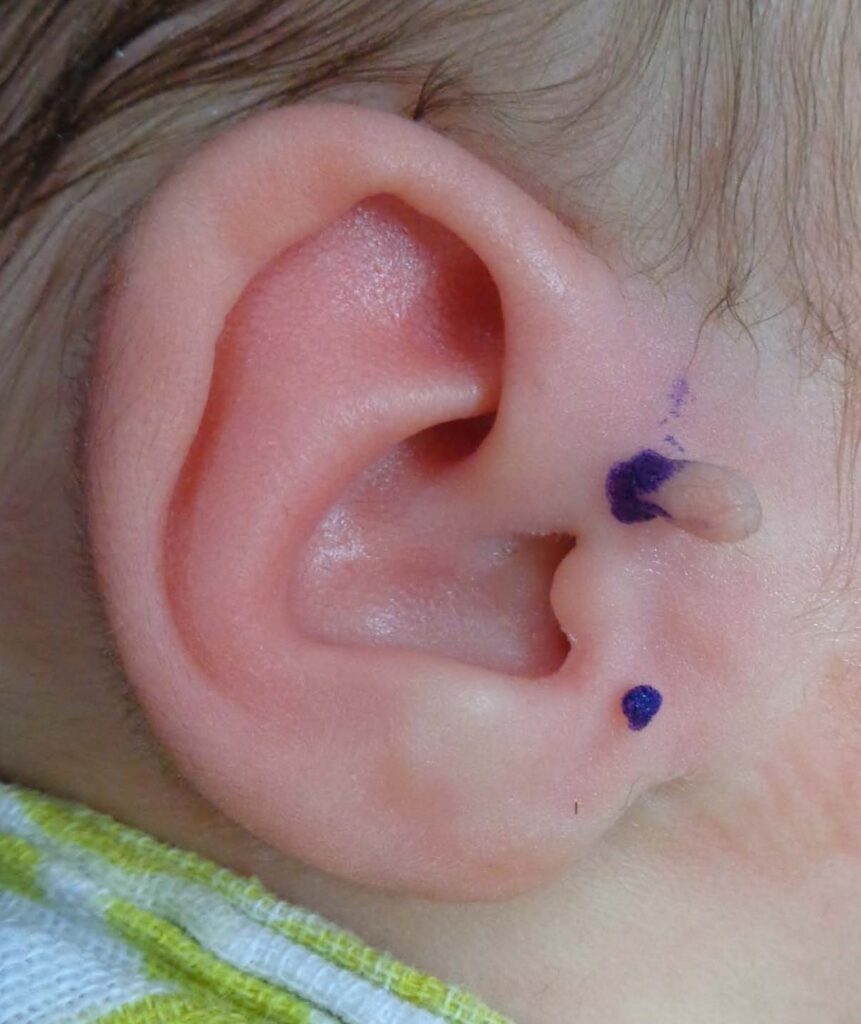
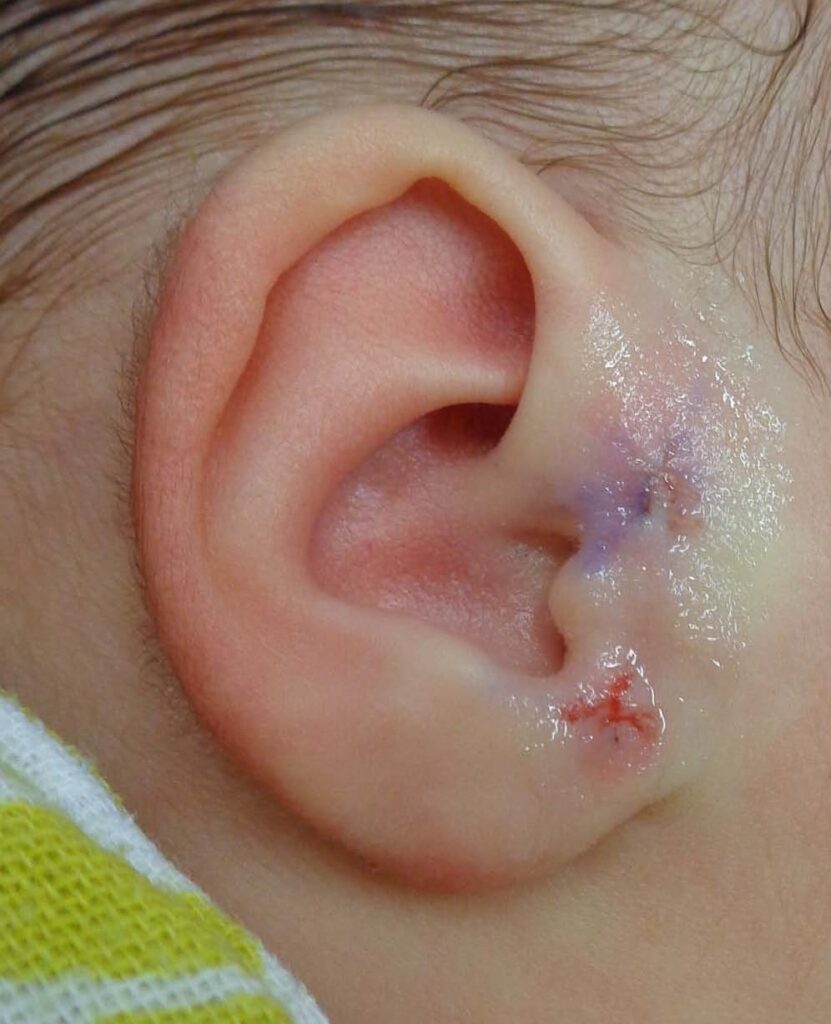
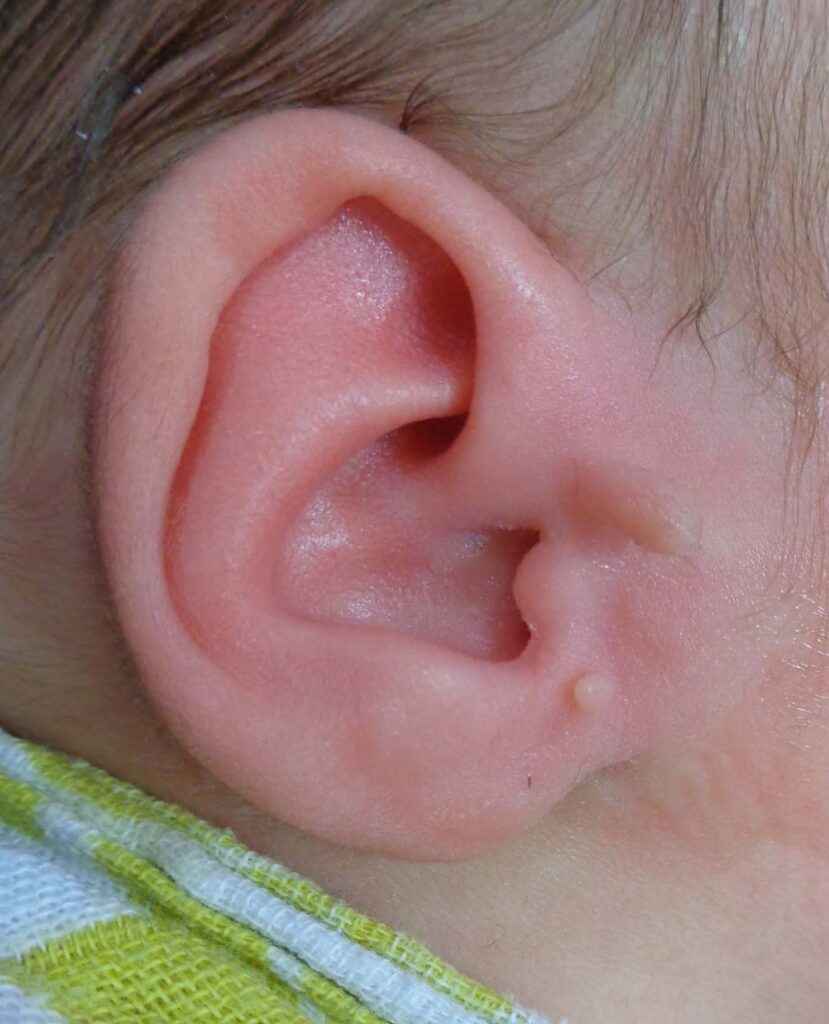
The photographs below show a typical example of preauricular skin tags and their removal in an infant under local anaesthetic. 

✉️ Email your doctor’s referral and photographs of the area to request an appointment with Dr Jill Tomlinson.

📞 Phone (03) 9427 9596 if you have any additional questions
Procedure sequence

Image of a right ear with two accessory tragi before removal – after local anaesthetic cream has been removed.
Before removal – after local anaesthetic cream has been removed.
Right ear with two accessory tragi; the skin tags are marked with purple texta at the base of the tissue
Marking stage – Dr Tomlinson marks the base of each tag before injecting local anaesthetic. This allows confirmation of the planned treatment sites with parents present.
A right ear with two surgical sites. The uppermost area has a sheen from surgical glue and a purple discolouration from texta. The lower site has a small amount of red blood visible around the pale coloured dissolving stitch.
After removal – dissolving stitches are in place, and surgical glue gives the skin a shiny appearance. Temporary redness, minor bruising, or faint surgical marker staining is normal and settles quickly.

Preappointment video