Skip to content

EAR MOLDING

Treating Ear Deformity in Infants

Important Appointment Information

Ear Molding Appointments are available on Tuesdays only.
Appointments are in high demand, so please only book if you are certain you can attend. Same-day cancellations or “no-shows” are disappointing for our team and for families on the waitlist who miss the opportunity for timely care.

Booking Hours

TUESDAYS

Understanding Ear Shape Abnormalities

Ear shape abnormalities are among the most common congenital deformities, affecting 4–5% of the population. During the first 18 weeks of pregnancy, the ears develop from the fusion of six separate “hillocks” — a complex process that doesn’t always go perfectly.

For many years, doctors have known that gentle molding in early infancy can reshape ears without surgery, using materials such as tape, foam, wire and tubing. However, reliable, easy-to-use methods have only become widely available in recent years. When started early, these treatments can correct deformities and prevent the need for future surgery.

The EarWell™ System and EarBuddies

The EarWell™ Infant Ear Correction System, developed by US plastic surgeon Dr Steve Byrd, is available in Melbourne at the rooms of plastic surgeon Dr Jill Tomlinson.

For babies older than six weeks, we can also fit EarBuddies, a parent-applied molding device designed by UK plastic surgeon Dr David Gault.

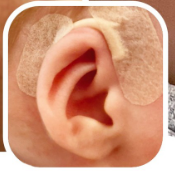
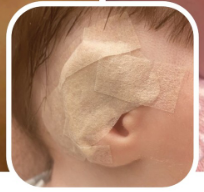
  • EarWell™ is applied under medical supervision and can achieve more powerful molding, including correction of the conchal crus, which is often present in mixed deformities.
  • EarBuddies are reusable and suitable for home application with guidance from our team. Many parents prefer to attend fortnightly fittings to ensure optimal results.

Effectiveness of Early Ear Molding

Ear molding is highly effective when started early. View our patients results:

Global research supports this:

  • Byrd et al. (2010) – Studied 831 infant ears; found only 30% of deformities self-correct. Early molding significantly reduced the need for surgery, with results often better than surgical alternatives.
  • Linford et al. (2007) – Reported that postpartum splinting can completely correct deformities, avoiding later surgery.
  • Tan et al. (2003) – Concluded molding is “an effective treatment strategy that largely negates the need for surgery.”
  • Doft (2015) – Reported 96% effectiveness and 99% parental satisfaction with EarWell™.
  • Paediatric Plastic Surgery Institute, Dallas – Reports 90% success in achieving good or excellent results for constricted ears.

Prominent Ears

Prominent ears are a common congenital condition where ears stick out more than average, and are often a result of a poorly developed antihelical fold, a deep conchal bowl, or a large conchomastoid angle

Cup ear, lop ear, mixed deformities

types of constricted ear deformities where the outer rim of the ear is tight, wrinkled, or folded over, with variations in severity.

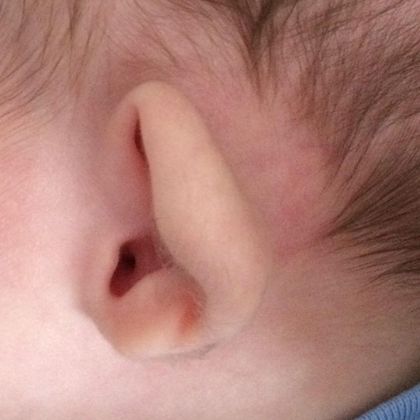
Stahl’s ear

Stahl's ear is a congenital malformation of the ear where an extra, horizontal fold of cartilage creates a pointed or "elf-like" appearance.

Helical rim abnormalities

Helical rim abnormalities are congenital ear deformities where the outer rim of the ear is abnormally folded, compressed, or wrinkled.

Cryptopia

Cryptotia is a congenital ear deformity where the upper part of the ear is buried under the scalp's skin, also known as a "hidden ear"

Common Questions

The duration of molding varies, and the response to treatment is influenced by your baby’s age. Starting early leads to shorter treatment times and higher success rates.

Age at Start Minimum Duration
At birth 2+ weeks
4 weeks 4+ weeks
8 weeks 8+ weeks
12 weeks 10+ weeks
16–24 weeks ≥12 weeks
Over 6 months ≥16 weeks

Note: These are minimum timeframes. Babies with mild abnormalities need less molding than those with severe deformities. Infants with a family history of prominent ears may require slightly longer treatment and closer follow-up.
Parents can minimise follow up appointments after treatment by monitoring progress using smartphone photos.

Newborn ear cartilage is soft and pliable, making it ideal for molding. This flexibility is due to high levels of maternal oestrogen in the baby’s system at birth, which rapidly decline over the first six weeks of life.

For this reason, treatment started within the first 6 weeks is the most effective.

Due to reduced effectiveness in older infants, we do not offer consultations for babies aged 3 months or older, and we do not recommend ear molding beyond 6 months of age.

The risks of ear molding are lower than surgical risks, and the cosmetic results can be superior.

The most common issue is skin irritation, usually caused by moisture (from water, milk, or tears). To prevent this:

  • Keep your baby’s ears dry at all times.
  • Use a hat, headband, flannel, or bib to protect the area.
  • If tapes get damp, use a hairdryer on a cool setting to dry them.
  • If tapes become moist, discoloured, or smelly, the device should be removed to allow the skin to dry.
  • Skin allergy, infection, or ulceration
  • Cartilage perforation
  • Early device detachment (requiring rescheduling)
  • Longer-than-expected treatment duration
  • Failure to achieve the desired result
  • As ear cartilage matures, ear molding becomes less effective. Once your child is too old for ear molding, options include:

    • No treatment
    • Otoplasty (ear surgery) – usually performed from age 4 onwards. Surgery is tailored to the specific ear shape and can correct conditions such as prominent ears, underdeveloped folds, Stahl’s ear, cryptotia, macrotia, and others.
    More information on surgery for prominent ears is available here.

How to make an appointment

Appointments are available on Tuesdays only.

📞 Call (03) 9427 9596 or ✉️ email info@jilltomlinson.com to request a booking.

Before your appointment, please watch our Pre-Appointment Video, which explains the ear molding process. All adults attending the appointment should view the video in advance.

At your consultation:

  • You will meet one of Dr Tomlinson’s registered nurses, trained in ear molding, who will review the process and answer your questions.
  • Nurse-only consultations are available without a referral, but a doctor’s referral is strongly recommended.
  • Medicare rebates are not available for nurse consultations.

For patient registration forms and cost information, see Appointments & Fees.
You’ll receive a detailed confirmation email once your appointment is scheduled.